
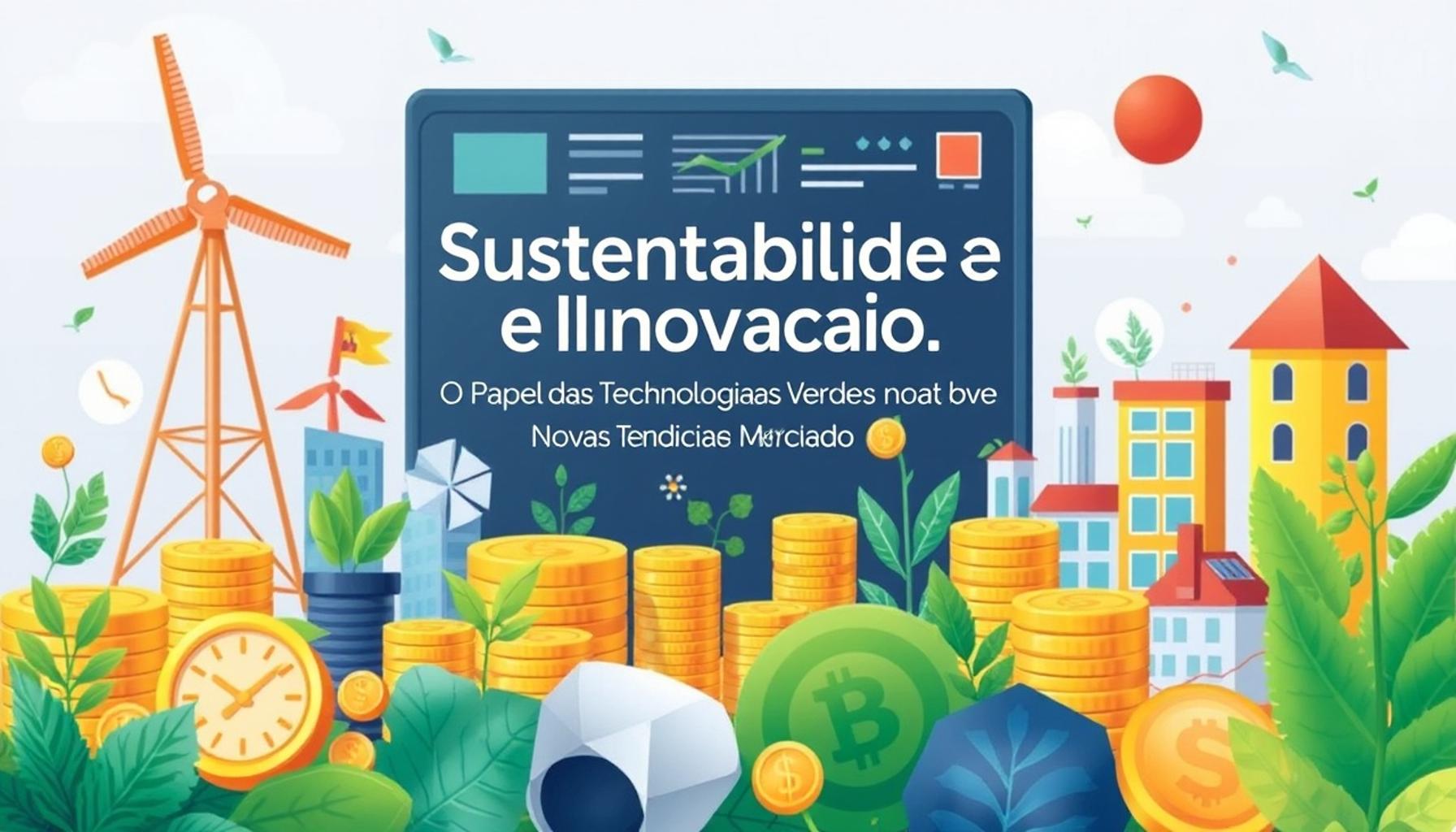
Sustainability and Innovation: The Role of Green Technologies in New Market Trends
The Changing Landscape of Modern Markets
The intersection of sustainability and innovation is reshaping industries and influencing how businesses operate in today’s world. As environmental concerns become increasingly critical, a growing number of companies are actively seeking ways to implement sustainable practices. This transition is not just about being eco-friendly; it also serves as a pivotal strategy for unlocking new economic opportunities.
Key Factors Driving Sustainability and Innovation
Several factors are pivotal to this trend towards sustainability:
- Consumer Demand: Modern consumers are becoming more aware of their carbon footprints. Surveys have shown that around 66% of consumers are willing to pay more for sustainable products. This shift is prompting businesses to adapt their offerings to meet the rising demand for eco-friendly options, from biodegradable packaging to sustainably sourced materials.
- Government Incentives: In the United States, federal and state governments are actively promoting green technologies. Programs like the Investment Tax Credit (ITC) for solar energy systems and various state-level rebates encourage both businesses and homeowners to invest in renewable energy solutions, making them more financially viable.
- Investment Opportunities: Savvy investors are increasingly channeling their funds into companies that prioritize sustainability. This phenomenon, known as green investing, highlights a preference for companies that demonstrate responsibility toward the environment and society. For example, mutual funds and exchange-traded funds (ETFs) focused on sustainable businesses have seen a substantial rise in popularity.
Innovative Solutions for Market Demands
To meet these growing market demands, businesses are adopting innovative practices and technologies:
- Renewable Energy Technologies: The installation of solar panels has surged, with thousands of homes and businesses utilizing them to reduce electricity costs while contributing to a cleaner energy ecosystem. Wind turbines, particularly in states like Texas and Iowa, are also becoming significant players in the energy sector, harnessing wind resources to generate power sustainably.
- Smart Grids: Smart grid technology enhances energy management by integrating digital communications into the traditional electrical grid. This allows for more efficient electricity distribution and reduces energy loss. Cities like San Diego are pioneering smart grid initiatives, which help optimize energy use and support the integration of renewable resources.
- Sustainable Agriculture: In the agricultural sector, innovative methods such as vertical farming and organic farming are gaining momentum. These approaches not only reduce the environmental impact of food production but also address food security challenges. Urban areas are seeing a rise in vertical farms that use minimal land and significantly less water while providing fresh produce to local communities.
Thriving in a New Marketplace
By embracing these advancements, businesses are not only tackling ecological concerns but also preparing themselves to succeed in a competitive market. Understanding the impact of green technologies is essential for anyone aiming to navigate today’s rapidly changing economic landscape. Firms that prioritize sustainability stand to enhance their brand loyalty, attract new customers, and ultimately achieve long-term profitability.
In conclusion, the integration of sustainability and innovation is creating a more eco-conscious marketplace, where both businesses and consumers can benefit. As we continue to witness this transformation, it is clear that those who adapt will not only contribute to a healthier planet but also position themselves for future success.
DISCOVER MORE: Click here to dive deeper
Innovative Solutions for Market Demands
As the marketplace evolves, driven by increased awareness around environmental issues, businesses must adapt to meet the rising demand for sustainable solutions. Embracing innovative practices and the latest technologies not only appeals to eco-conscious consumers but also optimizes operations, leading to cost savings. Here are some prominent approaches that are reshaping various industries:
- Renewable Energy Technologies: The shift towards renewable energy is significant, with solar and wind energy leading the charge. Many businesses are now installing solar panels not only in residential areas but also in commercial infrastructures. These installations allow users to slash energy costs while reducing their environmental impact. For example, the state of California, characterized by abundant sunshine, incentivizes solar power investments through various programs. This not only showcases the feasibility of solar solutions but also exemplifies how such innovations can play a critical role in advancing a sustainable energy future.
- Smart Grids: The introduction of smart grid technology marks a transformative step in energy distribution. By integrating digital technology into traditional electric grids, utilities enhance their ability to manage energy flow effectively. This improvement leads to less energy waste and supports the integration of renewable resources. Cities like Chicago are adopting smart grid initiatives, offering their residents tools to better monitor and manage their electricity use. Such empowerments encourage consumers to engage with their energy consumption, ultimately driving down costs and promoting more conscious energy use.
- Sustainable Agriculture: In response to the global demands for food security and sustainable food production, agriculture is undergoing meaningful changes. Techniques such as vertical farming allow for crops to be cultivated in urban settings with minimal land and water. For instance, farms located within repurposed shipping containers are emerging in various metropolitan areas across the U.S. This innovation brings fresh produce closer to city dwellers, reducing the need for long-distance transportation and its associated emissions. Furthermore, regenerative farming practices that prioritize soil health and biodiversity are gaining traction among environmentally conscious farmers, suggesting a more balanced approach to agriculture that benefits both people and the planet.
- Waste-to-Energy Technologies: The push for sustainability extends into waste management through emerging waste-to-energy technologies. These innovations convert waste into usable energy, addressing two significant challenges: landfill waste reduction and energy production. A leading company in this field, Waste Management, is investing in facilities designed to transform organic waste into biogas, which can be harnessed to generate renewable energy. This not only exemplifies a circular economy model but also illustrates how waste, typically seen as a burden, can contribute positively to energy sustainability.
As the landscape of business continues to evolve, the adoption of these innovations reveals opportunities for growth and competitive advantage. Companies that embrace sustainable practices and invest in green technologies not only enhance their market positioning but also align with an audience increasingly focused on environmental responsibility. By prioritizing sustainability alongside profitability, businesses can lead the charge in a market that values ecological health as much as consumer satisfaction.
DISCOVER MORE: Click here to learn how to apply
Challenges and Opportunities in Scaling Green Technologies
While the adoption of green technologies presents numerous benefits, it is essential to recognize the accompanying challenges that businesses may face as they strive to implement sustainable solutions. Balancing innovation with feasibility is not always straightforward, and various factors come into play. However, these challenges can often lead to unique opportunities for growth and market differentiation.
- High Initial Investment Costs: One of the primary hurdles in adopting green technologies is the substantial upfront investment required. For many companies, especially small to medium-sized enterprises, transitioning to renewable energy sources or implementing energy-efficient systems can pose financial strain. For instance, installing solar panels or retrofitting buildings with energy-efficient appliances demands significant capital. Nevertheless, many local and state governments in the U.S. offer incentives, grants, and tax reductions to alleviate this financial burden. Companies can offset costs over time through energy savings, showcasing that initial investments can yield long-term financial sustainability.
- Technological Adoption and Training: Transitioning to green technologies often necessitates training employees to use new systems and methods effectively. For example, the introduction of software platforms for smart energy management can be met with resistance from workers accustomed to traditional practices. Investing in comprehensive training programs not only helps overcome this resistance but also enhances employee buying into the company’s sustainability goals. Companies such as Tesla emphasize continuous learning and adaptation, setting a precedent for investing in human capital as part of the push towards a greener future.
- Supply Chain Management: Building a sustainable supply chain can be complex, as various components must work together harmoniously. Companies must ensure that their suppliers adhere to sustainable practices, from sourcing raw materials to transportation methods that minimize emissions. The demand for transparency and traceability in supply chains is increasing, prompting companies like Unilever to publish detailed reports on their sustainability practices. By working collaboratively with suppliers, businesses can not only ensure compliance but enhance their overall brand reputation and customer loyalty.
- Consumer Education and Engagement: Effectively communicating the benefits of sustainable practices to consumers is vital for promoting green technologies. A gap often exists between the innovative solutions businesses implement and consumer willingness to adopt them. For instance, electric vehicles (EVs) have gained traction, yet misconceptions regarding their environmental impact and cost remain prevalent. Companies such as Nissan and Tesla have focused on extensive marketing campaigns, highlighting the long-term savings and benefits of EVs, thereby increasing consumer acceptance. Engaging with consumers through education on sustainability can open dialogues that lead to a more comprehensive understanding and support of green technologies.
The challenges associated with bringing green technologies to market can thus be reframed as opportunities for differentiation, employee engagement, and consumer loyalty. As businesses continue to innovate and adapt to sustainability demands, overcoming these hurdles often fosters resilience and establishes legitimacy in an increasingly competitive market. By positioning themselves at the forefront of these technological advancements, companies can not only meet consumer expectations but contribute to a sustainable future that benefits all stakeholders involved.
DISCOVER MORE: Click here for details
Conclusion
In conclusion, the journey towards sustainability through green technologies is not only a necessary response to pressing environmental issues but also a gateway to innovative market trends. As we have explored, while challenges such as high initial investment costs, technological adoption hurdles, supply chain complexities, and the need for consumer education exist, these can ultimately catalyze opportunities for businesses. For companies willing to invest in sustainable solutions, the potential for enhanced reputation, customer loyalty, and operational efficiency is significant.
The shift towards sustainability isn’t merely about compliance; it represents a long-term strategy that aligns business objectives with ecological preservation. Firms that prioritize green technologies can differentiate themselves in a crowded market, establishing a competitive edge that resonates with increasingly environmentally-conscious consumers. Furthermore, as governments and organizations ramp up their commitment to sustainability, businesses engaging in these practices will likely find themselves benefiting from incentives and broader market support.
Overall, the integration of sustainability and innovation through green technologies paves the way for a cleaner, more resilient future. For businesses ready to embrace this shift, the outcome could lead to not just financial success but a meaningful contribution to the well-being of our planet. As we move forward, the call to action is clear: pioneering the path to sustainability is essential not only for thriving in modern markets but for ensuring a livable world for future generations.

Linda Carter
Linda Carter is a writer and expert known for producing clear, engaging, and easy-to-understand content. With solid experience guiding people in achieving their goals, she shares valuable insights and practical guidance. Her mission is to support readers in making informed choices and achieving significant progress.